A home energy storage system stores electricity so it can be used later. It is often combined with a residential solar system, but it can also charge from the grid during off-peak periods.
The basic idea is simple:
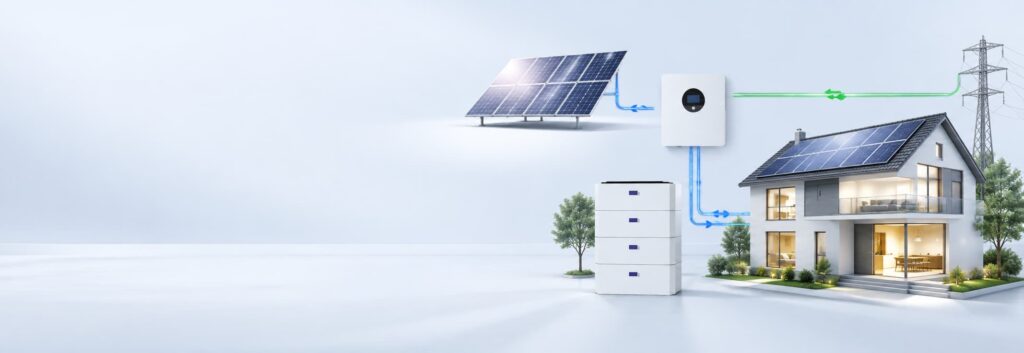
PV → Inverter → Battery → Home / Grid
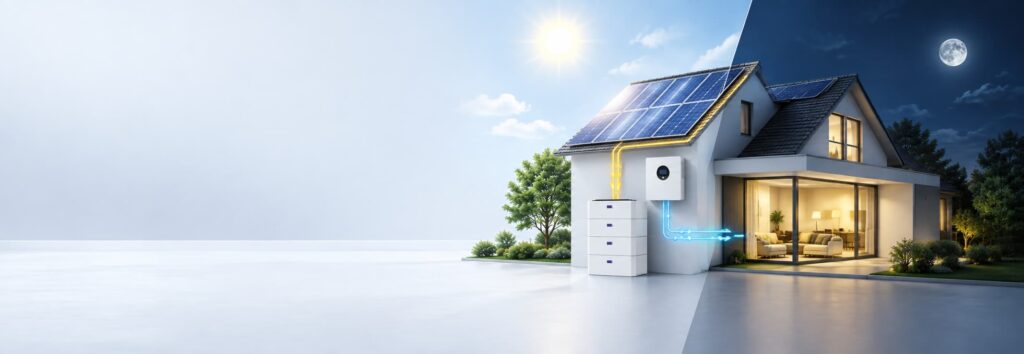
When solar generation is higher than household demand, extra electricity can be stored in the battery. When demand increases in the evening or during a power outage, the battery can discharge and supply the home. The source material describes home storage in this way: charging during low-demand periods, then using the stored energy during peak demand or outages.
Main Components of a Home Energy Storage System
Solar Panels
Solar panels generate electricity during the day.
If the home is using less electricity than the solar system is producing, the excess energy can be sent to the battery instead of being used immediately.
Inverter
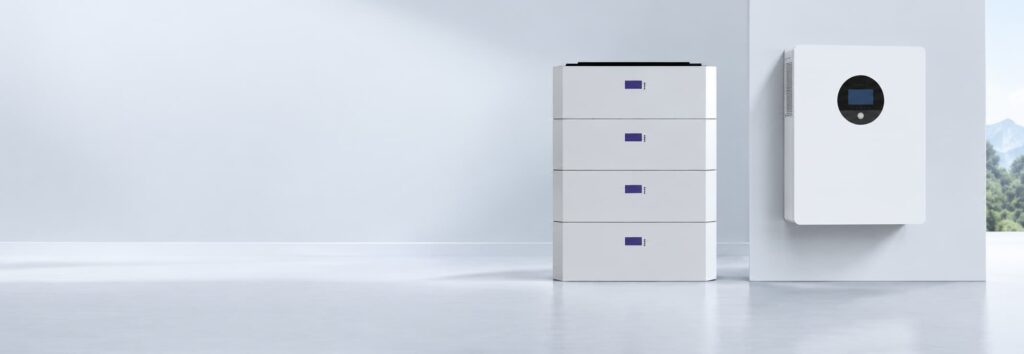
The inverter connects the battery, solar system, and household electrical system.
It manages power conversion and helps control where the electricity goes.
Battery
The battery stores energy for later use.
In residential systems, batteries can be used for:
- evening electricity use
- backup power
- peak-time electricity reduction
- higher solar self-consumption
The source material notes that home storage is commonly combined with photovoltaic systems to support residential and small-scale electricity demand.
BMS
The Battery Management System, or BMS, manages battery operation and protection.
The supplied stackable battery material states that the battery modules include an internal BMS for software and hardware protection.
Grid
The grid can supply power when solar generation and battery energy are not enough.
Depending on the system design, the grid may also be used to charge the battery during lower-cost electricity periods.
Home Loads
Home loads include appliances, lighting, air conditioning, electronics, and other equipment using electricity.
The storage system supplies these loads when required.
How Does a Home Energy Storage System Work During the Day?
During the day, solar panels generate electricity.
The electricity is normally used in this order:
Solar power → Home loads → Battery storage → Grid
If the house is using less power than the solar system is producing, the remaining energy can charge the battery.
This helps reduce the amount of solar electricity exported or left unused.
How Does It Work at Night?
Solar generation stops or drops significantly at night, but household demand often continues.
The battery can then discharge the electricity stored earlier in the day.
The source material points out that solar generation and household demand do not always happen at the same time. Solar production is concentrated during the daytime, while household electricity demand may be higher in the afternoon or evening. Battery storage helps shift that energy to a more useful time.
What Happens During a Power Outage?
If the system is designed for backup operation, the battery can provide electricity when the grid is unavailable.
The exact backup capability depends on:
- battery capacity
- inverter power
- selected backup loads
- battery charge level
- system configuration
A battery with more kWh can generally provide longer backup, but the inverter and discharge power must also support the required loads.
Why Combine Solar With Battery Storage?
Without a battery, excess solar electricity generated during the day may not be available later when household demand increases.
With energy storage, part of this electricity can be stored and used later.
The source material explains that this can improve solar self-consumption by storing excess solar energy and releasing it when loads require power.
Final Thoughts
A home energy storage system connects solar generation, battery storage, an inverter, household loads, and the grid into one energy system.
Its basic function is:
generate electricity → store excess energy → use it later
For residential projects, the battery size, inverter compatibility, load demand, and required backup time should all be considered together.
A well-matched system can make better use of solar generation and provide additional power support when household demand is higher.