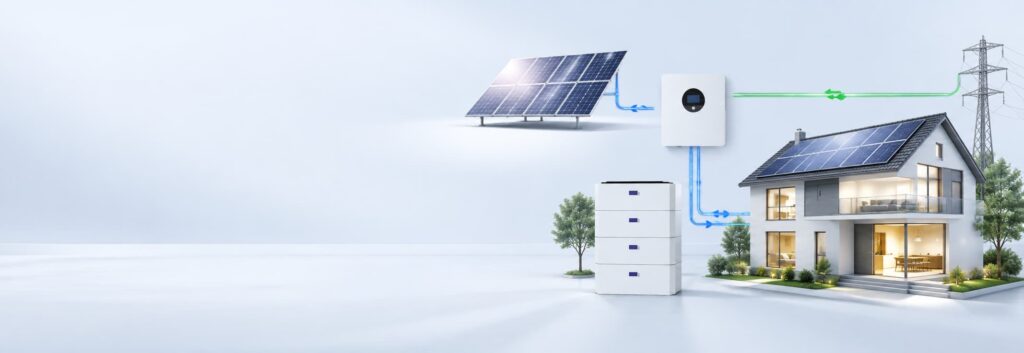
Solar panels often generate the most electricity during the day, while household electricity demand may be higher in the afternoon or evening.
This timing difference means that part of the solar electricity may not be used directly by the home. A battery can store the extra solar energy and release it later when household demand increases.
Solar Only vs Solar + Battery
Without battery storage, a home usually uses part of the solar electricity directly and sends the remaining electricity to the grid.
With battery storage, more of the extra daytime solar energy can be stored and used later.
The basic difference is:
Solar only:
PV → Home loads → Excess power to grid
Solar + battery:
PV → Home loads → Battery → Evening or nighttime use
This helps increase solar self-consumption because a larger share of the electricity generated by the solar system is used by the home instead of being exported immediately.
Example Calculation
The source material gives an example using:
- 6kW solar system
- 20kWh daily solar generation
- 10kWh battery
- €0.35/kWh retail electricity price
- €0.06/kWh feed-in tariff
In the solar-only example, 10kWh is used directly and 10kWh is exported to the grid, giving a 50% solar self-consumption rate.
In the solar-plus-battery example, the additional 10kWh is stored and used later, so the example assumes all 20kWh of solar generation is used by the household.
This example shows the basic principle of battery storage: extra daytime solar energy can be shifted to a later period when the home needs it.
Why Higher Self-Consumption Matters
Higher solar self-consumption can help reduce the amount of electricity purchased from the grid.
This can be especially useful when:
- retail electricity prices are higher than feed-in tariffs
- household demand is high in the evening
- the solar system produces more electricity than the home uses during the day
- the battery is sized to match the available excess solar energy
The source material also notes that battery storage can help smooth the difference between daytime solar generation and later household demand.
Battery Size Still Matters
A larger battery does not automatically mean better solar self-consumption.
If the solar system does not generate enough excess electricity, the battery may not be fully charged. If the battery is too small, part of the available solar energy may still be exported.
Battery capacity should therefore be matched with:
- daily solar generation
- household electricity use
- load timing
- usable battery capacity
- inverter power
Final Thoughts
Home battery storage can increase solar self-consumption by storing excess daytime solar energy and using it later.
The main idea is simple:
generate during the day → store excess energy → use it when solar production falls
The actual financial benefit depends on local electricity prices, feed-in tariffs, solar generation, battery cost, and household energy use.
So the example above should be treated as an illustration of how the system works, not as a universal savings estimate.